
.png)

"I Don't Feel Sad, Just Numb": The Hidden Face of Atypical Depression

If you ask someone to describe what depression feels like, they will usually talk about crying spells, dark bedrooms, and intense sadness.
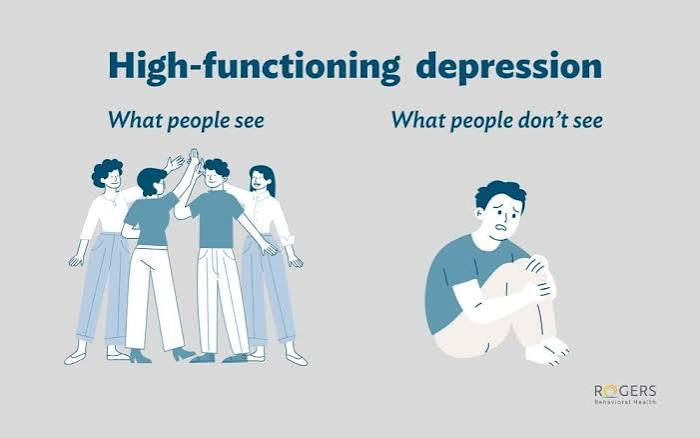
So when you wake up in the morning feeling completely flat, devoid of emotion, and physically heavy—yet you haven't cried in months—it’s easy to think: I can't be depressed. I’m just lazy. I just need to get it together.
Here is what many people don't realize: Depression does not always feel like sadness. Very often, it feels like nothing at all.

In clinical psychiatry, this experience is known as Atypical Depression. Despite its name, it is one of the most common presentations we see in our Bel Air office. If you have been living in a gray fog, feeling disconnected from your own life and wondering where your spark went, your brain is trying to tell you something important.
The Strange Rollercoaster of Mood Reactivity
The defining feature of atypical depression—and the reason it is so frequently missed—is something clinicians call mood reactivity.
Unlike classic melancholic depression, where a person feels deeply despondent no matter what happens, someone with atypical depression can temporarily brighten up. If a good friend calls, if you hear exciting news, or if you go out for a nice dinner, you might laugh, engage, and feel genuinely present for an hour or two.
Then, you get home, the door closes, and the heaviness drops right back over your shoulders.
This back-and-forth makes people second-guess themselves: See? I had a good time tonight. I’m just being dramatic. But that temporary lift doesn't mean you are fine; it is simply how this specific subtype of depression behaves.
What Does Atypical Depression Feel Like Day-to-Day?
1. Leaden Paralysis (Moving Through Molasses)
This is not standard tiredness. It is a distinct, physical sensation where your arms and legs feel like they are weighed down by lead. Walking up the stairs, getting out of the car, or standing up to make dinner feels like an Olympic event. Your brain wants to move, but your limbs feel too heavy to follow.
2. The Endless Sleep Trap (Hypersomnia)
You can sleep for nine, ten, or twelve hours, wake up, and still feel completely drained. You might find yourself taking long afternoon naps, only to wake up with a lingering headache and a deeper sense of brain fog. Your bed feels like a sanctuary, but sleep never leaves you feeling rested.
3. Intense Carbohydrate Cravings
Your brain is starving for a quick neurochemical lift, and it knows where to find one: simple sugars and carbs. You might find yourself reaching for bread, pasta, chips, or sweets late at night, searching for a brief hit of comfort that inevitably ends in a blood-sugar crash.
4. Raw Rejection Sensitivity
A short email from your boss without a greeting. A text message left on "read." A slight shift in your partner’s tone of voice. To an unencumbered nervous system, these are minor details. In atypical depression, they hit like a physical punch. You find yourself spiraling into shame, feeling deeply disliked, or pulling away completely to keep from getting hurt.
Why Typical Solutions Fall Short
If you have tried to solve this with standard advice—"just get outside," "hit the gym," or "push through it"—you have probably ended up feeling worse.
Atypical depression involves distinct biological variations in your dopamine and norepinephrine pathways, alongside altered cortisol rhythms. When your brain is running low on the neurotransmitters that create drive and physical energy, forcing yourself to "try harder" is like stepping on the gas pedal of a car with an empty fuel tank.
Traditional talk therapy helps, but if your neurochemistry is stuck in an energy-saving freeze, you need an integrated medical approach that treats the underlying biology.
Steps to Clear the Fog
Stop beating yourself up for feeling numb: Recognize that emotional numbness is your nervous system’s way of protecting itself from overload. It is a biological signal, not a character defect.
Anchor your morning routine: Keep your wake-up time consistent, even on the weekends. Open your blinds immediately or step outside into the morning light for ten minutes to tell your brain the night is over.
Get a comprehensive psychiatric evaluation: Atypical depression often responds poorly to standard, first-line SSRI monotherapy. It requires a tailored clinical plan that addresses dopamine, energy, and physical vitality.
You do not have to spend your days trapped behind a wall of numbness. At Favor Mental Health in Bel Air, our team brings over 17 years of clinical healthcare experience to diagnosing and treating complex mood disorders. We will help you understand what your brain is experiencing, restore your physical energy, and bring color back into your daily life.
At Favor Mental Health, we provide comprehensive mental health evaluations, individualized treatment plans, psychotherapy, and medication management when clinically indicated.
📍 Favor Mental Health
Suite 9B, 260 Gateway Drive, Bel Air, MD 21014
📞 410-403-3299
If you or your family are experiencing mental health concerns, early support can make a meaningful difference.


Comments